Skip to content
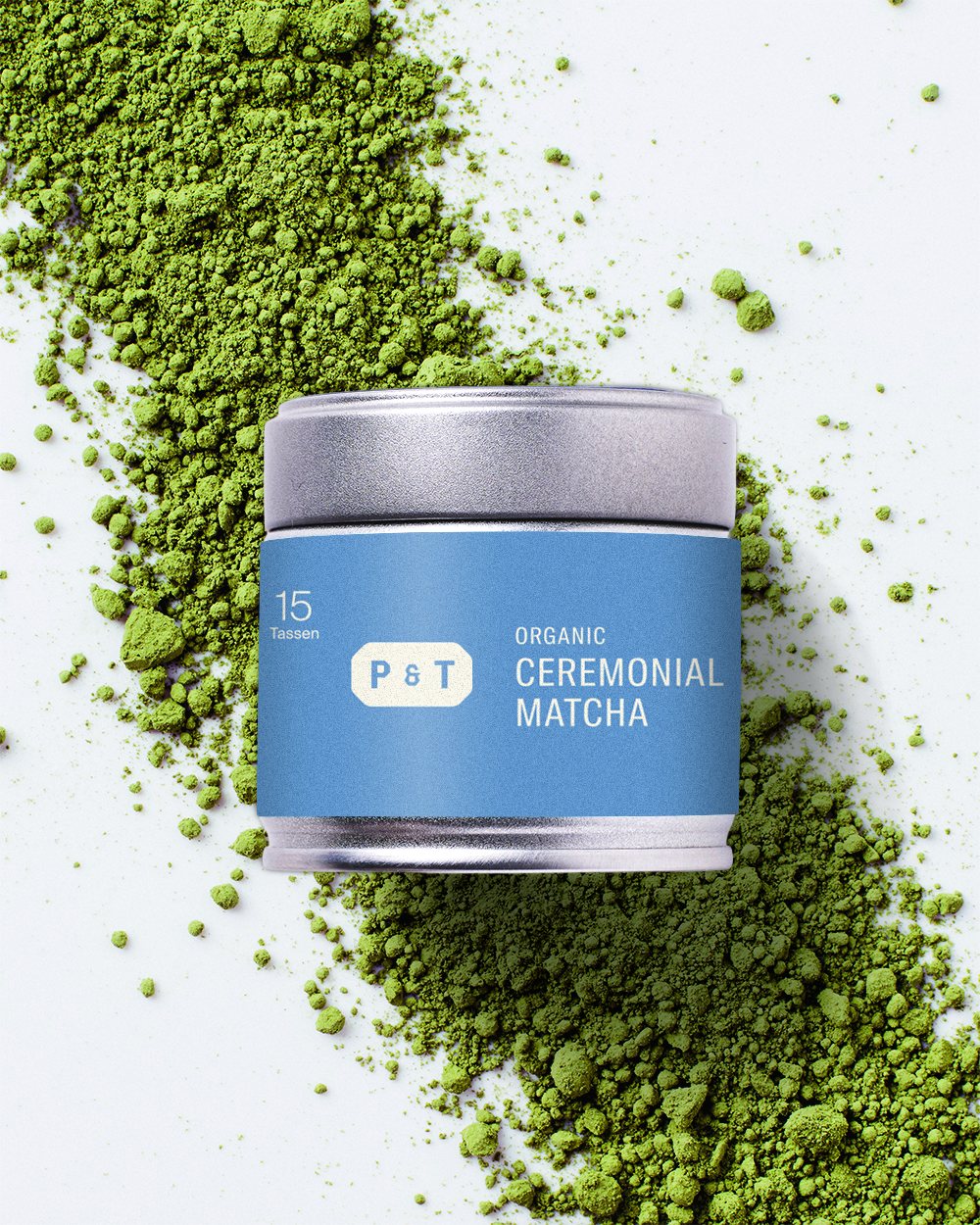
Metallische Dose mit blauem Etikett für P&T Bio Ceremonial Matcha, frisches grünes Pulver daneben

Successfully added!

View cart

Cart

Your cart is empty

Organic Ceremonial MatchaMatcha Powder

Our organic ceremonial matcha from Japan: traditionally stone-ground and shade-grown, vibrant green with balanced umami, a smooth, creamy texture and natural sweetness.
Black WeekendSave 30% on all products Deal ends in 01 day 21 Hrs 25 Min 03 Sec
off all products
30 %
off outlet products
+20 %

Deal ends in

01 Days 21 Hrs 25 Min 03 Sec

Excludes gift cards and Tea Tastings

€ 20,30€ 29,00
You save € 8,70 € 67,67 / 100g Lowest price (30 days): € 20,30 incl. VAT, plus shipping

In stock, with you in 3 – 5 days

Marie

A truly high-quality matcha. Fresh, smooth, and wonderfully rounded in flavor. It's become my favorite way to start the day.

Ingredients
Organic green tea powder
Japanese green tea* (*certified organic)
Store in a cool and dry place. Once opened, consume within few weeks.

Free shipping available

Free from €49, €99 or €149, depending on your country. With you in just a few days.

P&T Club perks

Join for free and get 10% off your first order.

Here for you

Questions about tea, brewing or your order? Our team is happy to help.

Returns within 14 days

Easily registered through our returns portal.

What you'll taste

Green Tea
Organic Ceremonial Matcha

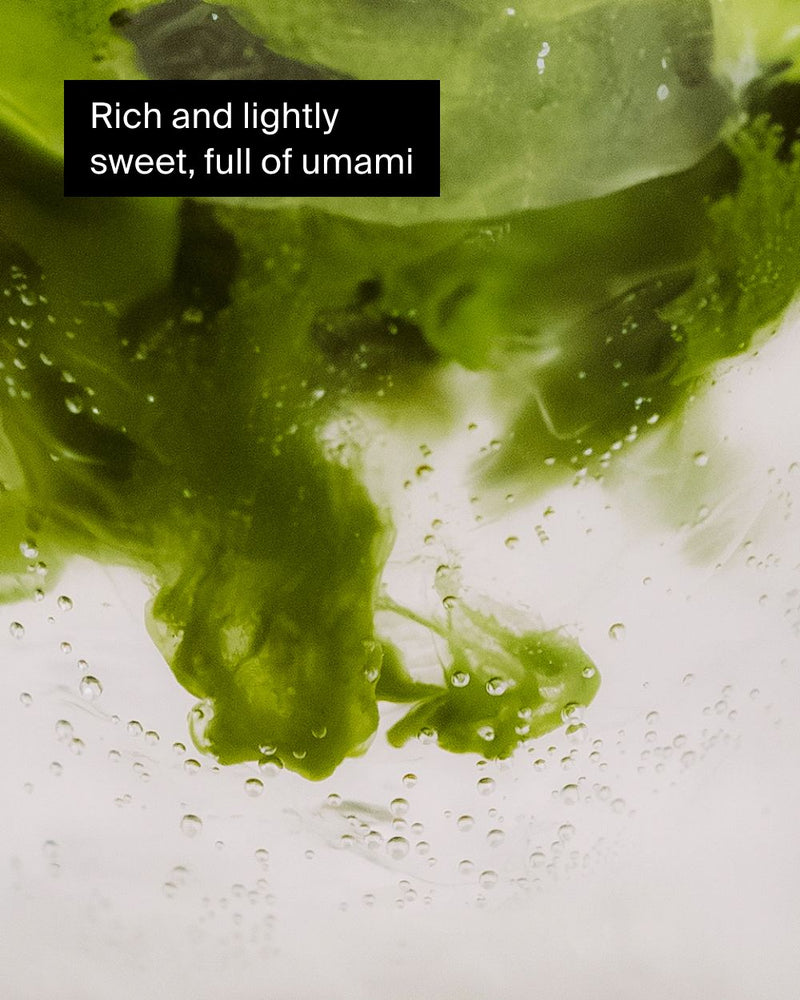
Vibrant green, velvety-smooth and full of balanced umami. Our Organic Ceremonial Matcha combines spring and summer harvests for an intense yet naturally sweet taste. Made for every day and every Matcha mood. Enjoy it pure or make it a creamy Matcha Latte.

Vegetal
Sweet
Roasty
Fruity

How to prepare Organic Ceremonial Matcha perfectly

Dicke, cremige weiße Flüssigkeit fließt spiralförmig und bildet konzentrische Wellen.
How to prepare Organic Ceremonial Matcha perfectly
  1. Sift your matcha

    into a bowl and add hot, not boiling, water.

  2. Whisk it frothy

    Loosely from the wrist, in an M-motion, until the mixture turns creamy.

  3. Straight up, hot latte, or iced

    Enjoy it straight, or froth milk for a latte, pour it into a glass, and top with the matcha. For the iced version, fill the glass with ice first.

The story behind Organic Ceremonial Matcha

Three weeks before harvest, the tea plants are shaded from direct sunlight. This helps develop Matcha’s signature sweet, umami-rich taste and vibrant green colour. After harvest, stems and veins are removed and the leaves are processed into Tencha. The Tencha is then finely ground in traditional stone mills to create the smooth Matcha powder in your cup.

Nahaufnahme von leuchtend grünen Teepflanzen unter einem schützenden Netz.
Szenische Uferpromenade, Vulkan im Hintergrund, pastellfarbenes Gebäude, grüner Park, blaues Wasser mit Boje.
Origin map for Kagoshima, Japan
KagoshimaJapan

Where your tea grows

Our Organic Ceremonial Matcha comes from Kagoshima at the southern tip of the Japanese volcanic island of Kyushu. Its warm climate and volcanic soils provide ideal conditions for growing high-quality green tea. The region is known for Japanese green teas including Matcha, Gyokuro and Sencha.
Klares Glas mit Eiswürfeln, in das grüne Teeflüssigkeit von P&T eingegossen wird.
  • Japanese
    origin

  • Traditionally
    crafted

  • Alternative
    to coffee

  • Complete
    sets

Top-Grade Matcha from Japan

Carefully selected, never compromised in quality

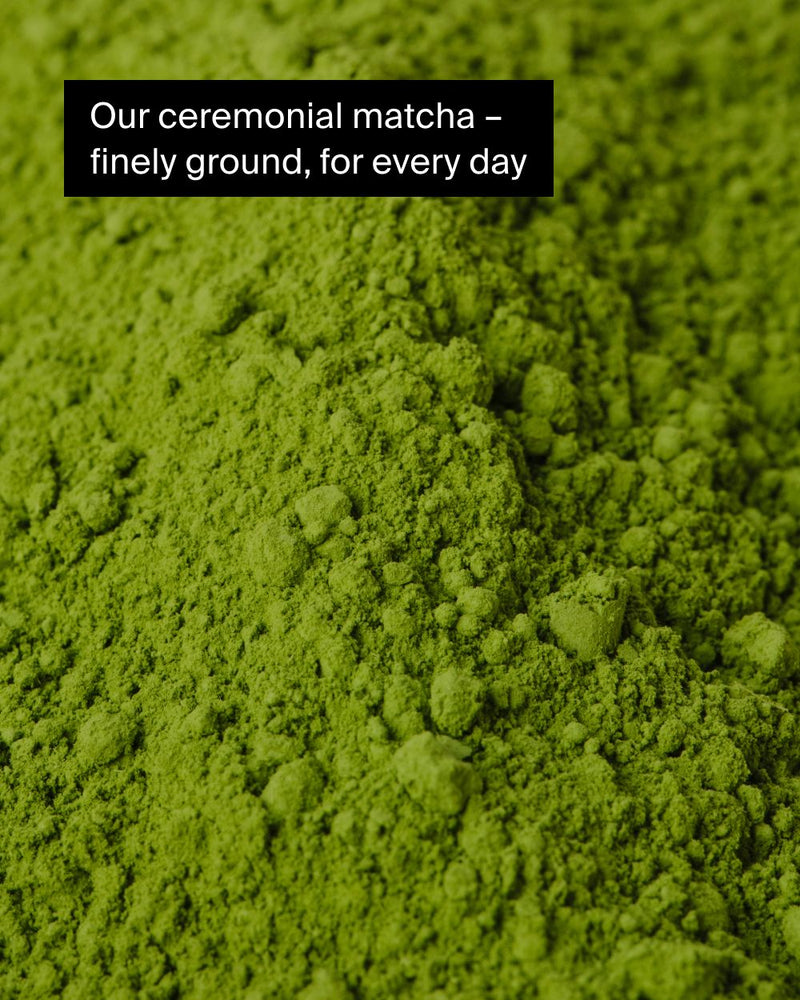
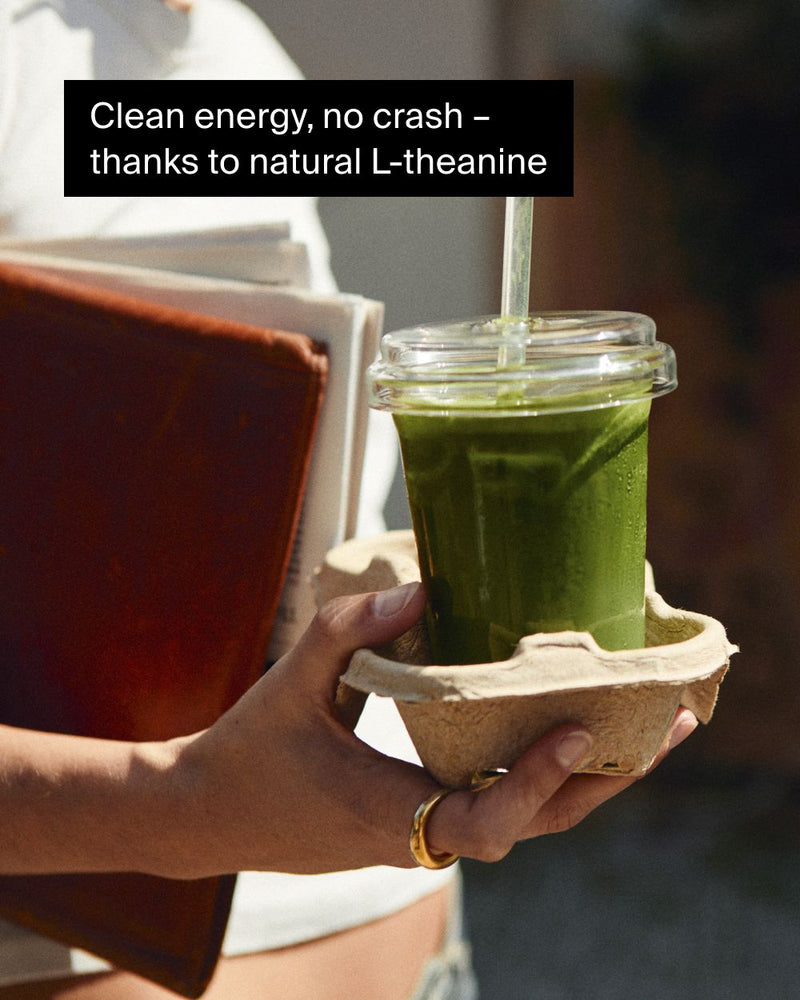
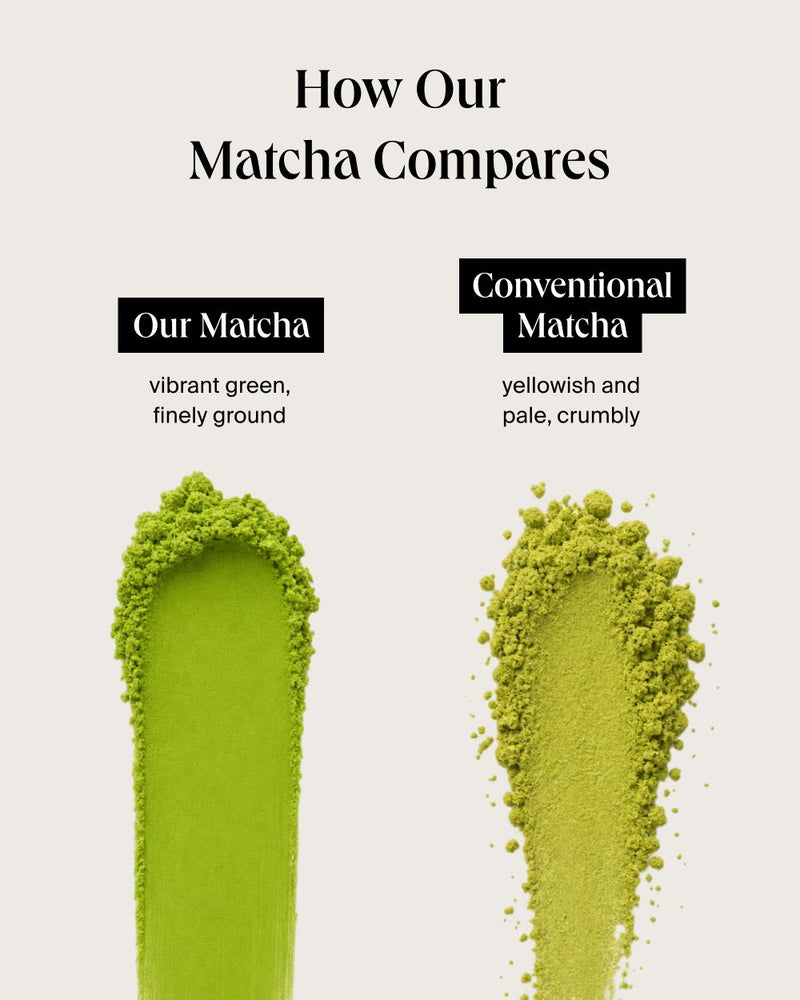
Every matcha we offer meets the highest standards you can see and taste — in its flavor, color, and texture. After extensive tastings and careful sourcing in Japan, our tea masters select only matcha that truly meets our expectations: vibrant green color, ultra-fine milling, and a rich, well-balanced umami profile. The quality starts before the harvest. By shading the tea plants, the leaves develop greater depth, more complex flavor, and their signature color. Traditionally stone-ground, this process creates a smooth, creamy texture with a subtle natural sweetness — refined enough to enjoy on its own and bold enough to stand out in a latte. Every batch is rigorously tested to ensure it consistently meets our high quality standards. Thanks to its natural combination of caffeine and L-theanine, matcha delivers steady, long-lasting energy — for clear focus without the typical coffee crash.

Tried & rated

Real voices from our community. Leave a review and earn club points.

FAQ about Organic Ceremonial Matcha

What is matcha made from?
Matcha is made from finely ground green tea leaves. For our Organic Ceremonial Matcha, the tea plants in Kagoshima (Japan) are shaded for around three weeks before harvest. This causes the leaves to develop more chlorophyll and amino acids, which gives matcha its vibrant green colour and umami-rich flavour. After harvesting, the stems and leaf veins are removed (the result is called tencha), and the leaves are then ground into a fine powder using traditional stone mills.
How much matcha should you drink per day?
For everyday enjoyment, 1 to 2 cups is common. One serving of Organic Ceremonial Matcha is about 2 g of powder to 60 ml of water. This lets you enjoy the full flavour without taking in too much caffeine. How much feels comfortable depends on your individual caffeine sensitivity.
How much caffeine is in a cup of matcha?
Because you drink the whole leaf with matcha, one cup contains more caffeine than the same amount of regular steeped green tea – roughly 30–70 mg per cup (2 g), depending on the dosage. The caffeine is absorbed together with the naturally occurring amino acid L-theanine, which is why many people find its effect more even than that of coffee.
Is matcha healthy?
Matcha is valued as a green tea that naturally contains catechins (including EGCG), the amino acid L-theanine, and caffeine. It provides gentle, steady energy and fits well into a balanced diet. Matcha is a food for enjoyment, not a medicine or remedy – for health-related questions, a medical professional is the right point of contact.
How do I recognise high-quality matcha powder?
High-quality matcha is bright, rich green (not yellowish or dull), extremely finely ground, and smells fresh and grassy. In taste it is creamy, umami-rich, and only mildly bitter. A pale colour or a sandy texture indicates lower quality or ageing.
What do the matcha quality grades (ceremonial, premium, culinary) mean?
Matcha is usually distinguished by grades: ceremonial-grade, made from the youngest, most tender leaves of the first harvest, is intended for drinking on its own. Culinary-grade is stronger and more affordable, intended for baking, smoothies, and lattes. Our Organic Ceremonial Matcha is designed for daily enjoyment – fine enough to be prepared on its own, yet flavourful enough to stay present in a matcha latte.
What should you look for when buying matcha?
Look for origin (Japan, e.g. Kagoshima or Uji), a fresh, bright green colour, a fine grind, and a harvest date or best-before date. Organic certification and airtight, light-protected packaging are further marks of quality, as matcha is sensitive to light, air, and heat.
Where does your Organic Ceremonial Matcha come from?
Our Organic Ceremonial Matcha comes from Kagoshima, at the southern tip of the Japanese island of Kyushu. The warm, rainy climate and volcanic soils are considered ideal for high-quality green tea. The region is especially known for matcha, gyokuro, and sencha.
Matcha or coffee – which is better for focus?
Both contain caffeine but work differently. In matcha, the caffeine is paired with the amino acid L-theanine. As a result, the energy is typically experienced as more even and longer-lasting – without the sudden peak and subsequent drop (the "crash") that many associate with coffee. This makes matcha a good everyday alternative to coffee for many people.
How do you make a matcha latte – including with oat or cashew milk?
Sift 2 g of Matcha into a bowl, add about 60 ml of water (not boiling, ~70 °C), and whisk for 15–20 seconds using loose M-shaped movements from the wrist until frothy. Then pour over frothed milk of your choice – with oat or cashew milk, the latte becomes especially creamy and slightly sweet. For an iced matcha latte, simply pour over ice and cold milk.
Can matcha also be prepared cold (iced matcha / cold brew)?
Yes. For a refreshing iced matcha, first whisk the sifted matcha smooth and frothy with a little water, then pour over ice cubes and cold water or cold milk. Prepared cold, matcha tastes milder and less bitter – ideal for hot days.
Why is high-quality matcha relatively expensive?
Good matcha is labour-intensive: the plants are shaded for weeks before harvest, only the most tender leaves are hand-selected, destemmed, and slowly ground on traditional stone mills – a single mill often produces only a few grams per hour. This effort is reflected in the colour, fineness, and flavour.