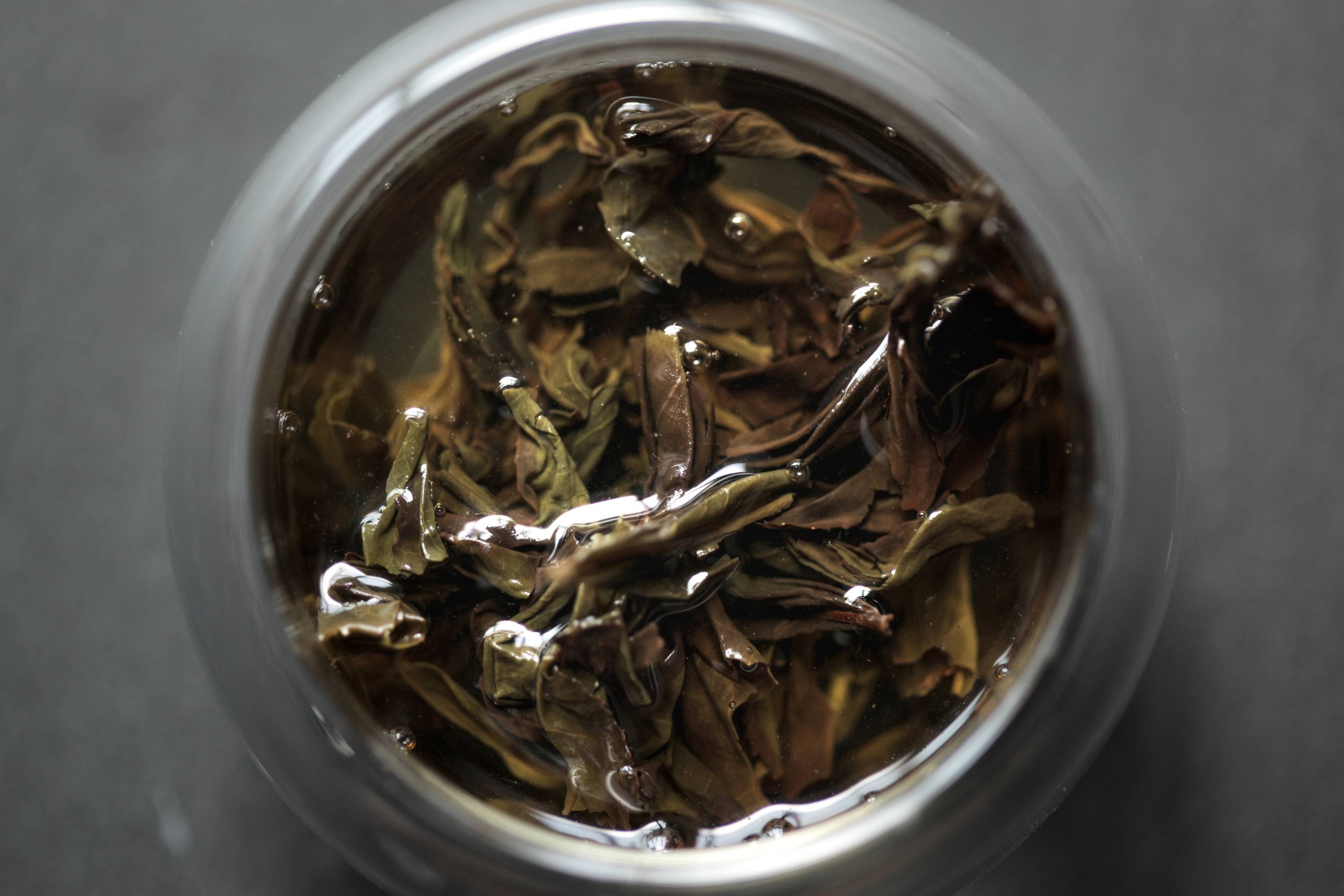
Description
What makes GABA tea unique is the process rather than the raw material. In principle, any traditional tea made from the Camellia sinensis plant can be turned into GABA tea – whether green tea, oolong or black tea. In practice, however, GABA oolong tea is by far the most common style.
After harvesting, the fresh tea leaves are placed for several hours in a carefully controlled, oxygen-free environment, usually sealed chambers filled with nitrogen. Under these conditions, part of the glutamic acid naturally present in the leaves is converted into GABA. Only after this anaerobic step does the tea undergo the usual stages of processing, such as oxidation, rolling and drying.
In terms of flavour, GABA tea differs clearly from conventionally processed teas. Many tea enthusiasts describe it as particularly smooth, rounded and mild, often with notes of honey, dried fruit or warm grain. Bitterness and astringency are typically much less pronounced, which makes GABA tea approachable even for newcomers. Often referred to as a calming-style tea, it is primarily valued for its distinctive method of production rather than for any specific effect.
Historical Background
The story of GABA tea does not begin in traditional tea gardens, but in a Japanese research laboratory. During the 1980s, scientists at Japan’s national tea research institutes were investigating ways to deliberately influence the chemical composition of tea leaves. In doing so, they discovered that unusually high levels of GABA accumulated when tea was processed under anaerobic conditions.
The resulting tea was initially marketed under the name “Gabaron” and quickly gained attention in Japan. Shortly afterwards, tea makers in Taiwan adopted the method and combined it with their long-standing oolong traditions. Over the following decades, high-altitude growing regions in Taiwan developed into a major centre for high-quality GABA oolong teas.
Today, GABA tea symbolises the meeting point of modern processing techniques and classical tea craftsmanship, with its origins in Japan and a strong cultural and practical foundation in Taiwan.
Interesting Facts
- A process, not a style: “GABA” refers solely to the method of processing. Visually, GABA tea may resemble green, oolong or black tea.
- Minimum content: To be officially recognised as GABA tea, it must contain at least 150 mg of GABA per 100 g of dry leaf.
- Taiwan at the forefront: Many of the most respected GABA teas today come from Taiwanese high-mountain regions such as Alishan or Shan Lin Xi. Some producers also experiment with GABA green and black teas.
- Gentle character: Due to the reduced levels of bitterness, GABA teas are often described as particularly gentle on the palate. Research into GABA in tea is still ongoing, but interest in this style continues to grow worldwide.
- Good to know: GABA tea can be brewed in both Western style and Gongfu style, and it tends to be forgiving when it comes to small variations in water temperature and brewing time.